
BJJ for Beginners: What to Expect Your First Month
Walking into your first BJJ class is intimidating. Here's what actually happens — and what it takes to get through it.
Almost every BJJ black belt has the same story about their first class: they had no idea what was happening, got submitted repeatedly, and couldn't wait to come back. That experience — confusing, humbling, strangely addictive — is close to universal. The question is what to do with it.
This guide covers everything you need to know as a beginner: what class looks like, what you'll actually learn, and how to get through the part where you lose constantly.
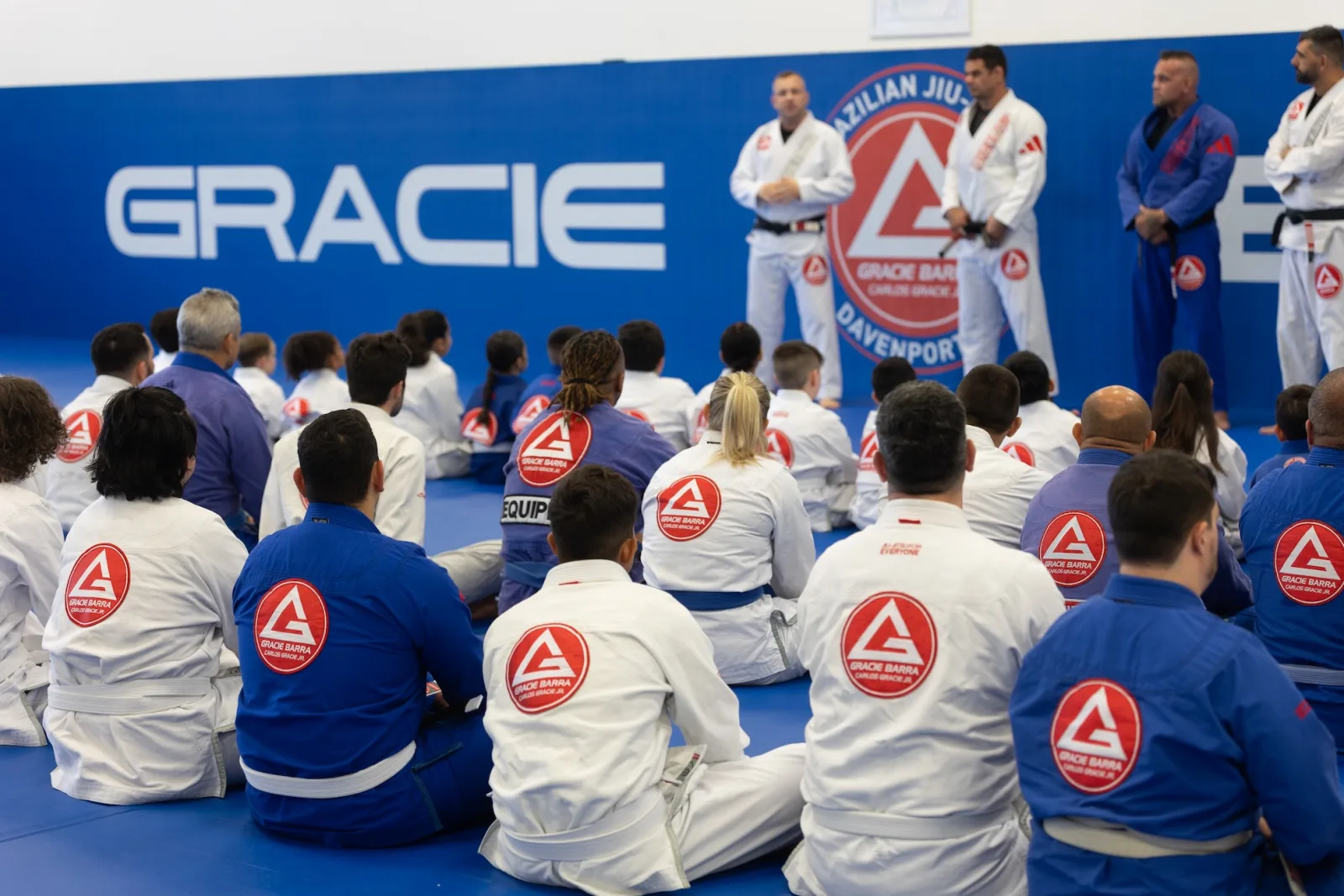
What Happens in a Beginner BJJ Class
A standard class runs 60–90 minutes and follows a predictable structure:
- Warm-up — movement drills like shrimping, forward rolls, and hip escapes. These look strange at first. They're the foundation of everything.
- Technique instruction — the instructor demonstrates 1–3 techniques. You drill them with a partner, 5–10 repetitions per side.
- Specific sparring — you practice the technique from a controlled starting position. Lower pressure than full sparring.
- Rolling — free sparring. As a white belt you may be paired with someone experienced who will move slowly and let you work.
- Cool-down and debrief — sometimes a brief Q&A or technique review.
Your first few classes, focus on the warm-up movements and drilling. Don't worry about submitting anyone. You won't — and that's exactly right for where you are.
What You'll Learn in Month One
Month one is about learning to move. Specifically: how to fall safely, how to move your hips to create space, and how to hold basic positions. The specific techniques your instructor covers will vary, but the foundations are consistent:
- Break falls — landing from a throw or takedown without injury
- Shrimping (hip escape) — the most fundamental BJJ movement; used to create space and recover guard
- Guard retention basics — how to keep your guard (legs between you and your opponent) when on your back
- Escaping mount and side control — the two most common bad positions for beginners
- A few basic submissions — typically armbar, rear-naked choke, and triangle
You won't be able to execute most of these cleanly under pressure in month one. That's fine. Drilling them correctly is the entire goal.
The Beginner Experience: What the Research Says
Starting BJJ is psychologically unique among sports. A 2023 study published in Frontiers in Psychology found that BJJ practitioners are primarily motivated by self-development, community, and challenge — not competition or aggression. The same research noted that the sport attracts people who are specifically seeking growth through difficulty.
That explains something coaches see constantly: beginners who struggle the most in their first weeks often become the most dedicated long-term students. The discomfort of losing is a filter that selects for exactly the mindset BJJ rewards.
The same research found that experienced practitioners report significantly higher levels of life satisfaction and wellbeing compared to beginners — suggesting the discomfort of early training gives way to something genuinely rewarding over time.
What to Wear
For your first class, comfortable athletic clothes work fine — shorts and a rash guard or t-shirt. Your school may loan you a Gi (the traditional kimono) or you can borrow one. If you continue past the trial period, you'll want to buy your own Gi. At Gracie Barra schools, the standard Gi is white.
Hygiene matters in BJJ. Trim your nails (fingers and toes), shower before class, and wash your Gi after every session. These aren't optional courtesies — they're how a training environment stays healthy for everyone.
How to Survive Your First Roll
Rolling (live sparring) as a white belt is an exercise in controlled panic management. A few things that help:
- Tap early and tap often. There's no prize for suffering through a submission. Tapping quickly keeps training safe and lets you reset faster.
- Don't use pure strength. It tires you out in 30 seconds and teaches you nothing. Try to move technically even when it doesn't work.
- Focus on one thing. Pick one position to try to hold or one escape to attempt. Rolling is too chaotic to think about everything at once.
- Tell your partner you're new. Good training partners adjust their pace and pressure for beginners. Most BJJ practitioners actively enjoy helping newer students learn.
Expect to be submitted frequently — possibly every round — for several months. This is not failure. This is exactly how BJJ works. Every submission is a lesson if you pay attention to what preceded it.
When Does It Start to Click?
Most beginners report a shift somewhere between 3 and 6 months in. You start to recognize positions before you're fully trapped. You start to flow between movements rather than thinking about each one individually. A technique you drilled 50 times suddenly appears naturally in a roll.
That click is one of the most satisfying experiences in martial arts. The practitioners who reach it are the ones who kept showing up during the months when everything felt impossible.
Common Mistakes Beginners Make
- Going too hard too early. Intensity before technique builds bad habits and causes injuries. Start light.
- Comparing yourself to colored belts. A blue belt has 2+ years of training. A purple belt has 4+. You're comparing month one to years of work.
- Skipping class after a bad session. The bad sessions are the most important ones. Come back.
- Training only when fresh. If you only show up for techniques and skip rolling days, your progress will be much slower.
- Quitting before the click. The most common form of attrition in BJJ is people leaving in months 2–4 — right before things start to make sense.
The first month of BJJ is hard. The second month is slightly less hard. By month six, you'll have a hard time explaining to non-practitioners why you go as often as you do. That's the progression. You've just started the longest, most rewarding martial art you'll ever train.
If you're in the Davenport area, come try a class. Our adult BJJ program welcomes complete beginners every week — no experience, no uniform, no contract required.