
Does Muay Thai Have Belts?
The short answer: not the way BJJ or karate does. Here's how Muay Thai actually measures skill — and what that means for your training.
If you're coming from a BJJ or karate background, you're used to a clear visual progression: white belt, blue belt, black belt. Muay Thai works differently. Traditional Muay Thai — the national sport of Thailand — has no belt system at all. Skill is measured in a more direct way: by how well you fight.
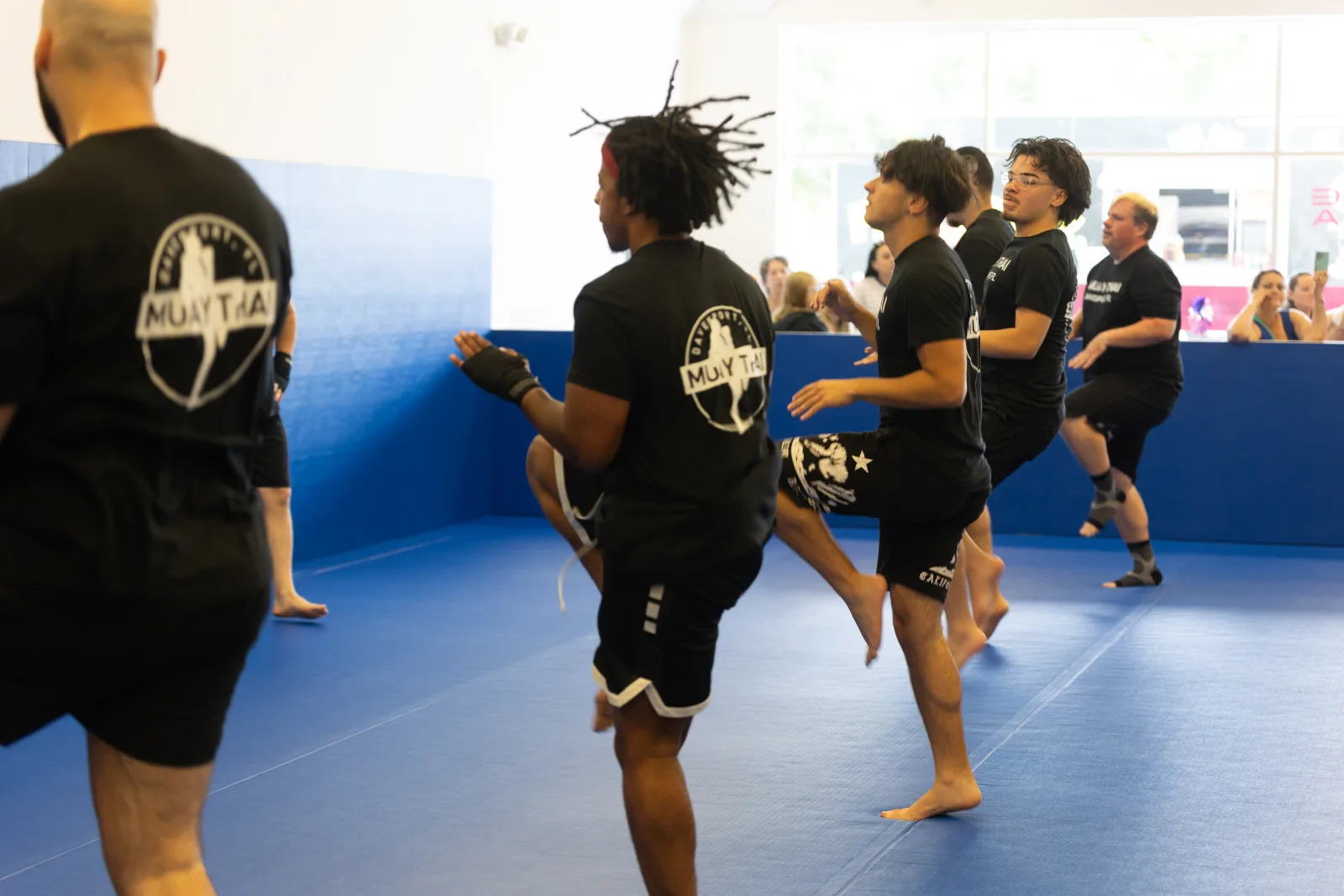
Traditional Muay Thai Has No Belt System
In Thailand, Muay Thai is a combat sport first and a martial art second. Fighters are judged on their ring record, their style, and who they've beaten — not on a colored belt or certificate. A young fighter from a Bangkok gym earns respect through performance, not promotion ceremonies.
This is actually one of the things that serious practitioners respect about Muay Thai. There's no shortcut. You can't fake it. If you can't fight, you can't claim rank.
What About the Arm Bands (Prajioud)?
You may have seen Muay Thai fighters wearing colored armbands called prajioud (also spelled prajead). These are not a ranking system — they're a traditional spiritual accessory worn for protection and good luck, blessed by a monk before a fight. Different gyms and organizations have attempted to co-opt the prajioud into a grading system, but this is a Western adaptation, not traditional Muay Thai.
Some schools also award a mongkol — a headband worn during the Wai Kru ritual — to fighters who have earned the right to compete. But again, this reflects readiness to fight, not a formalized rank.
Western Muay Thai Gyms and Grading Systems
Some Western Muay Thai gyms — particularly those catering to fitness students rather than competitive fighters — have introduced colored armband or badge systems to give students a sense of progression. These vary widely from gym to gym and have no universal standard.
At Gracie Barra Davenport, our Muay Thai program focuses on authentic skill development over symbolic rank. Your progress is measured by what you can actually do: the sharpness of your technique, your conditioning, your timing on the pads, and your ability to apply what you've learned under pressure.
How Do You Know You're Getting Better at Muay Thai?
Without a belt system, progress in Muay Thai is visible in more immediate ways:
- Pad work quality — your instructor's feedback, your power and accuracy on pads, the combinations you can execute without thinking
- Sparring performance — how you move, defend, and respond in live exchanges
- Technical milestones — mastering the roundhouse, developing a teep, learning to clinch effectively
- Conditioning — getting through five rounds without gassing out is its own form of progress
- Competition results — if you choose to compete, your record speaks louder than any belt
Muay Thai vs BJJ: Which Ranking System Is Better?
Neither is better — they reflect different cultures and different martial arts. BJJ's belt system provides structure, clear milestones, and external validation that many students find motivating. Muay Thai's lack of formal rank reflects its roots as a fighting sport where results speak for themselves.
Many students at Gracie Barra Davenport train both. BJJ gives you the belt progression and ground game; Muay Thai gives you the striking fundamentals and ring-ready conditioning. Together, they make a complete martial arts foundation.
Ready to Start Muay Thai?
No experience needed. Our Muay Thai classes are open to all fitness levels and ages. See our Muay Thai program in Davenport for schedule and details, or get started today.